

In the long run
On training for my first half-marathon, embracing earnestness and turning into my mother (complimentary)

[Written in November, 2023]
It’s 7:55 a.m. and I’m squished into the start line with thousands of other runners. I hear Olivia Chow’s voice echoing through a loudspeaker somewhere, saying that this race is an example of how we work together to lift each other up. I look at all the flashy high-tech sneakers and wonder if people are racing in new shoes, or if they are just better at keeping them pristine. A woman in front of me squeezes a toddler fruit pouch into her mouth. Another stranger gives me a hug. Everyone is jumping up and down to keep warm. I hear the race gun in the distance, and can almost feel the asphalt vibrate as the fastest runners bolt from the gates.
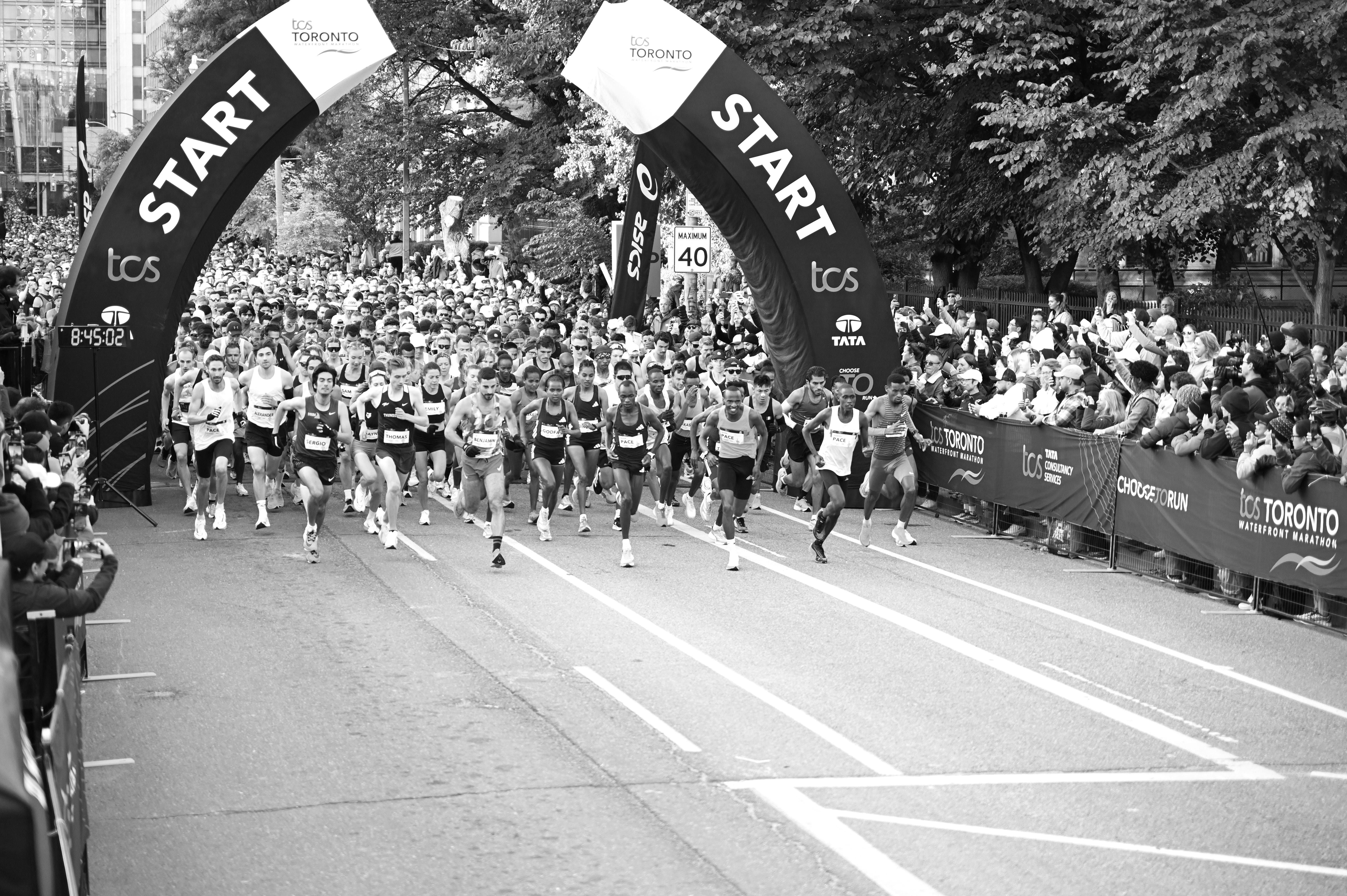
Two months ago it was the day after my 35th birthday: August 14. I was scrolling Instagram when I stopped at a post asking if anyone was doing the Toronto Waterfront Marathon in October. Maybe I’ll become a running mom, I fantasized.Watching marathons has always moved me: all kinds of people, just trying their best. I imagined the glory of pushing my body to the limit, and exhaustedly embracing family at the finish line.
But there was a problem: I had gone on precisely zero runs that year—or the year before, for that matter. I frantically Googled: can you train for a half-marathon in eight weeks? The internet said, Yeah, probably. I decided to try: I clicked the register button and estimated a completion time of two and a half hours.
When I told a close friend my plans, she assumed an early mid-life crisis, and responded, “You okay, girl?” I understood her concern: I think of myself as generally soft. I enter bodies of water painfully slowly, via the ladder. I can lounge all day with a book. I like my little luxuries—fresh flowers, bougie candles, fancy dinners. Every now and then, though, “Hardcore Bean,” as my three younger siblings have dubbed my infrequent alter ego, comes through. Portaging a canoe in the rain? Hardcore Bean. Giving birth in my bathroom with no drugs? Also Hardcore Bean. Finishing this race? Well, that would be something else I could add to the list.
As an introvert, I’ve always been drawn to the solo nature of running. I enjoy my own thoughts, and can happily plod along with a podcast without craving social stimulation. Like writing in a way, I like that you’re judged on the outcome—not your ability to make small-talk or participate in team politics. Unlike many other markers of adult success, you don’t have to rely on anyone else. You just show up. It’s a relatively easy way to prove yourself. And I certainly wanted to prove something: namely, that I wasn’t a failure, which was how I was feeling after a stalling post-baby career. If I couldn’t achieve what I wanted to professionally, maybe I could physically.
Three kilometres in, and I feel light and joyous, like a little gazelle. I smile at the strangers standing at the sidelines, cheering them on for cheering us on, and willingly slap the hands of anyone offering a high-five. I chuckle at the motivational, pun-filled posters, my favourite just, “Run, bitches!” My pace is exactly where I want it to be. I’m surprised at how great I feel, since I usually find the first five kilometres of any run the most mentally challenging.
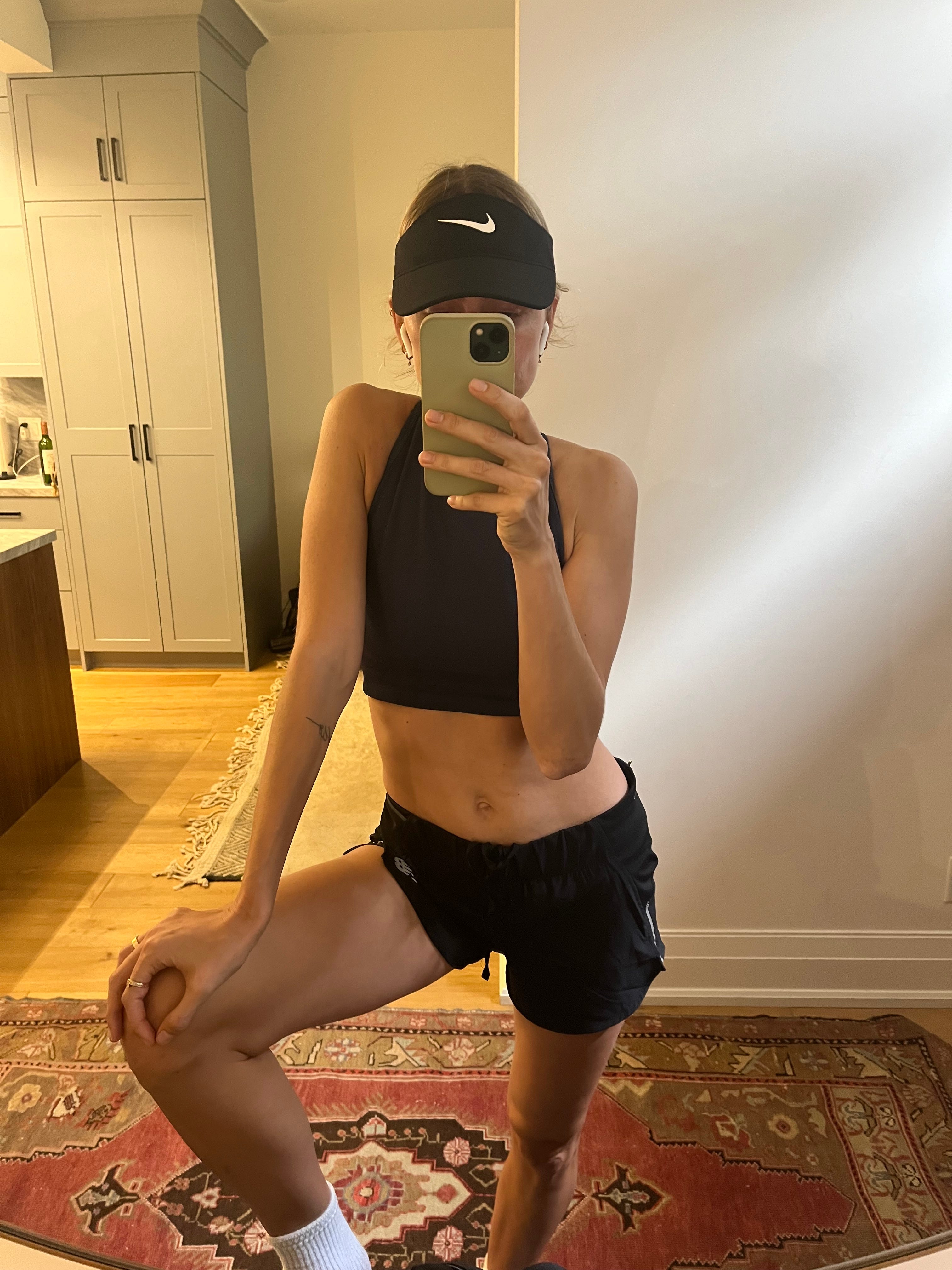
On my first run back in August, I thought I might die. The thick air from the heat wave didn’t help, nor did the route through a dusty construction zone. I was gasping for breath and regretting hitting my brother’s vape at the cottage the previous weekend. The second the distance on my app turned to five kilometres, I stopped for a giant Starbucks lemonade and strolled the rest of the way home.
But I kept going. I forced myself to get outside and run three or four times a week: one hills day, one speed day and one long-run day. As someone who works well under pressure or not at all (why I chose a freelance career built around concrete deadlines), the tight timeline worked for me—I simply couldn’t afford to miss a running day. I tracked my stats, and became addicted to the dopamine rush of improvements. As the runs got easier and my distances grew, I remembered how good it felt to be strong. When I started, my goal was just to finish the thing by whatever means necessary. But soon I wanted to do it fast.
At seven kilometres, I experience some minor hip flexor pain, but my body responds when I push it a bit faster. The wide-open Lakeshore Boulevard is crammed with all kinds of runners, and I study their form and their chosen accessories for the day. A man in a wheelchair is using his arms to propel him forward one rotation at a time. Someone else seems to be dressed like a bear, in a fuzzy, eared tuque. A dedicated “pacer” is decked out in a colourful tutu and prancing along while holding her time flag high in the air. The most baffling runners are those who don’t have any headphones in at all, just jogging along to the sound of their own heaving breath. At one point, we are running west along the highway, facing the fastest marathon runners who are already headed east back downtown. I marvel at their muscled legs, and how they float across the pavement seemingly exerting no effort at all.
I hate trying. It’s embarrassing. Or rather, I detest any hint of earnestness on my part. I’d rather roll up with limited preparation and pull off a mediocre result than share with the world that I actually want something. Call it the curse of being a naturally well-rounded child—somewhere within me I believe if I can’t do something easily, it’s probably not worth doing. I hate the idea of not excelling at something that I clearly, badly want—or, being the exact definition of a try-hard.
I used to run, in high school. I was even the cross-country team’s MVP in grade 11. But the night before I was the only student from my school sent to compete in the Ontario-wide finals, I went to a party and smoked some weed. I wasn’t willing to admit to my friends that I cared about the race and sacrifice a fun social experience. The next morning, my legs felt like lead and my lungs burned as I treaded through mud to make it to the end—arriving middle of the pack.
In my 20s, my family would run the Sporting Life 10k every year. But it was only because it usually fell on Mother’s Day and that’s how my mom—a former marathoner herself—wanted to spend her morning. I showed up hungover nearly every year, with how late I was out the night before a source of pride after I (barely) finished.
Thirteen kilometres into the race, and I’m finally heading back toward the city, the CN Tower lurking in the distance. My husband shares my tracking information on our family group chat, and I manage to send a smiling selfie back. I hear my mom’s response through my Airpods: she’s impressed by my pace, and says so in her typical texting style—with approximately one million exclamation points. I’m so focused that I miss my brother cheering from the sidelines, but he sprints across the road and catches up with me for a burst of encouragement.
Growing up, my mom was one of those people who did it all. She doted on her four kids, was beloved by the community, completed marathons and triathlons and owned and operated a preschool. She wore her emotions on her sleeve, and always tried to do the right thing. As a teenager it seemed overkill. Just chill out, I would think. You don’t have to do everything. I hated her practicality and her constant sneaker-wearing and had no desire to follow in her footsteps.
But what I once found embarrassing, I now admire. Her determination. Her strong moral compass. Her devotion to her children. Her mental health management. She doesn’t run anymore, but cold-plunges in Lake Ontario in January and goes on biking excursions around the world. I now find myself asking what she would do in situations, and take any comparisons as a huge compliment. It’s why this formerly too-cool-to-care mom is now volunteering to lead committees her daughter’s school—and signing up for half-marathons.
It was my mom who suggested, close to the marathon date, that I might be able to complete it in under two hours. “You never know,” she said. “Adrenaline can kick in.” I downplayed my ability, but secretly wondered if I had it in me. My stats certainly said no. I hadn’t even reached the pace needed in my fastest 10K, let alone for more than double the distance. But the more I thought about it the more I desperately wanted to try.
Once the 17-kilometre marker appears, I suck down my second gel pack and start to grin with the thrill of realizing I might actually reach my goal. Every song on my playlist feels divinely timed, and I beat my fists up and down during the final drum solo in Paul Simon’s “The Obvious Child.” When I see my husband and two-year-old daughter at the 20-kilometre mark, I bolt over for a quick kiss before sprinting off to cross the finish line.
I keel over to catch my breath and hobble forward to be herded along, cattle-like, with everyone else to the finish area. The first thing I do is turn off Strava and check my stats. I’m shocked at my pace, which is my fastest ever. I made it in under two hours—by six seconds, to be exact. My shorts are cold and damp, with what I originally assumed was sweat, but now realize is...pee (thanks, postpartum bladder). I take a moment to be grateful for my early-morning decision to wear black, and set off to search for my family amid the crowd. When my daughter sprints toward me for a giant hug, it’s all the glory I had imagined.
I guess it’s true what they say about adrenaline, and the power of connection. The early 20th-century sociologist Émile Durkheim coined a term called “collective effervescence”: the sense of energy and harmony people feel when they gather in a group for a shared purpose. Something about thousands of runners trying their best, combined with benevolent bystanders showing up to support total strangers, makes for a magical recipe.
Part of me wanted to struggle during the day even more, so I could talk about pushing through pain and doing whatever it took to prove myself. But, for once in my life I had solidly prepared, and because of that, it didn’t have to be a battle. Plus, I was still going down the stairs backwards two days later. Checking my race photos was also humbling. I imagined my face to be plastered in a pleasant smile, in keeping with my mood, but the reality was more of a hardened grimace. It wasn’t the face of a breezy, effortless runner, and that was okay.
Despite feeling proud of myself post-race, there was still a little voice in my head that said, Who cares? It’s only impressive if you did the full marathon. Heaven forbid I looked like I was bragging about something I wasn’t that great at anyway! But then I thought about the ultra-marathon people, and the Ironman people, and every single person on the planet who has someone who is faster or richer or smarter than them.
I remember asking my dad one day before he died what it was like to raise four small kids. He replied, “I just put my head down, and did the work. When I looked up it was ten years later.” Like running, life can be hard and it can hurt—but you just keep going. And you get better because of that one little action: showing up. The real test of Hardcore Bean is still to come, though: continuing to run outside in Canadian winters.
I agree wholeheartedly with Lindsay whoever she may be! Jean your honesty and sense of humour shine through. Keep writing and entertaining your readers you are extremely good at it!!!!!!
I’m beyond loving all your essays. You sweep me away with your words. I love how you are so honest and share your vulnerabilities! Keep them coming!!