

Same-day home delivery
Reflecting on my daughter's dramatic entry into the world, four years later

My daughter turned four this winter. It seems like both a blink and eternity since she was born, cone-headed and red, on my bathroom floor. It was around 5 a.m. on a freezing February morning, our house secured in a thick blanket of shimmering powder.
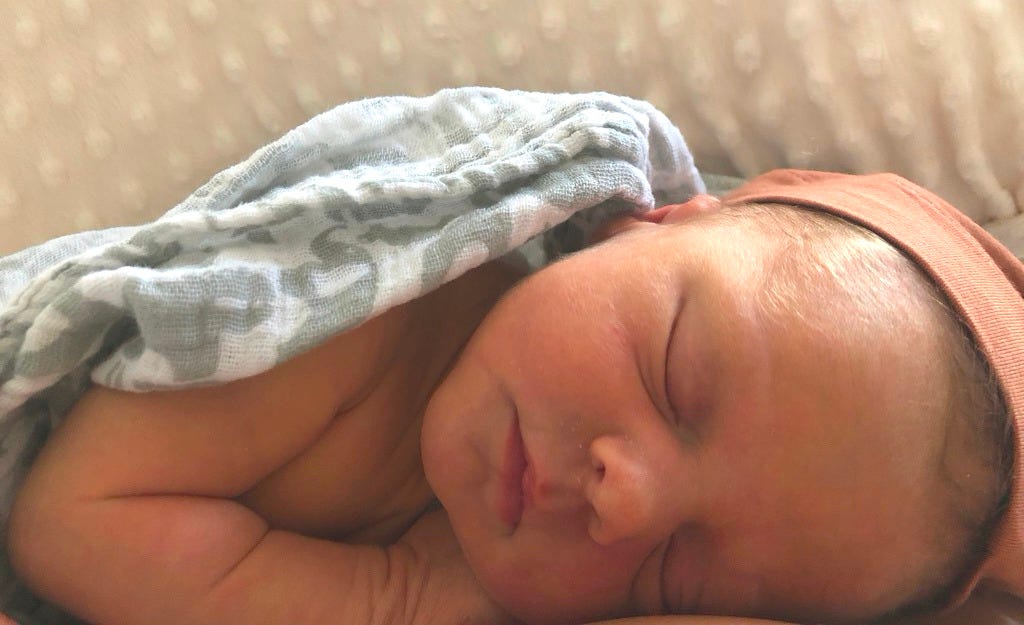
I’m on my back, spine pressed into the thin bath mat. Three midwives and my partner hover blurrily above, popping in and out of my vision. My child is on my chest. It feels as normal as moments before, the tiny body inside my belly. Someone says she’s a girl, and it seems like I always knew. I catch my husband’s eye. “Eva, right?” he asks. I nod. Vitals are good. A midwife puts a hat on her head. They’re concerned about her temperature. My placenta is in the sink, a pile of bloody towels in the hall.
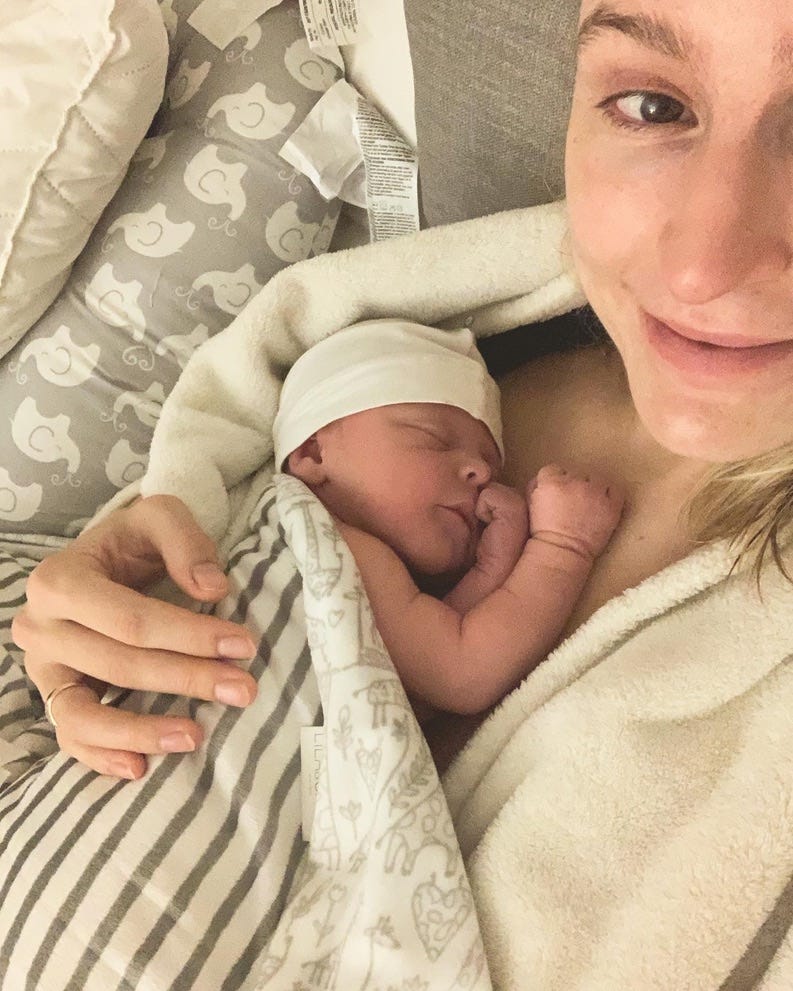
Our bed has been made with an old shower curtain under the sheets. I sink into it like it’s the Four Seasons. My daughter is tucked under my fuzzy robe like a kangaroo. An assessment of the damage to my vagina. A few minor tears, they can stitch them up here. Right now? Good, there’s freezing. They ask if the student midwife wants to give the stitches a shot. I hear a harsh correction. Something about too much bleeding. Talking to each other: “Would be a shame to have to go in now.”
We’re still here, so everything must be fine. They take out the sling, and make guesses on her weight. Six pounds something. Smaller than they thought, is she okay? I had a recurring nightmare I gave birth to a tiny creature the size of a thumb. She hasn’t cried, but she’s squirming like a baby bird. There’s some jaundice, but no need to worry yet. Her skin looks perfect and olive-toned to me. My milk hasn’t come in, but she’s suckling anyway. Shouldn’t the worst of the pain be over? These cramps feel excessive. They test the sturdiness of the bed. Nice and firm. Good for bedsharing.
Cookies and fruit are on the bedside table. The towels are in the laundry with a cup of table salt. It works wonders for blood stains, apparently. They’re leaving, my heroes. “The placenta is in the freezer, you can put it out with the green bin. Keep doing as much skin-to-skin as you can. We’ll be back tomorrow.”
A sigh of relief as the front door shuts. Just our family now, tucked in bed. I look at my partner and we burst into delirious giggles. What just happened?
“Your mom is going to kill me,” he says.
I used to tell Eva’s birth story with maximum drama, grinning as the gory details elicited gasps of horror from friends and family. But looking back four years later, my unplanned home birth was everything I wanted.
In Ontario, parents-to-be choose either a midwife or an OB. As soon as I started researching the differences, I knew I’d prefer the former. I was having a low-risk pregnancy, and wasn’t too concerned about complications. I was confident in the skill and experience of midwives, and there was a clinic near where I live in Toronto. I loved that whoever I saw at my appointments would be there at the birth, and the concept of post-partum home visits seemed like a luxury.
But it was still a relatively unusual choice in my family and my friend group—and even the province. Midwives attended approximately 20 per cent of births in Ontario in 2024—and that’s the highest the number gets in Canada. The comparison to other countries is stark: in Sweden, France and Japan, midwives attend close to 75 per cent of all births.
My plan early on in my pregnancy was still to give birth in the hospital where my midwife clinic has privileges—to the relief of my mother, who had her four children in an era when midwife-led home births were on par with occult rituals (midwifery only became legalized and integrated into the Ontario healthcare system in 1994). She told me I’d want the reassurance of having all the trappings of Western medicine available in case of anything unexpected. But as my pregnancy progressed and I learned more about the birthing process, I started to question if a hospital environment was right for me. As someone who’s easily overstimulated, I knew that the bright lights, loud noises and constant buzz of nurses and doctors wouldn’t be ideal for my relaxation.
But a home birth still seemed way too woo-woo. And, as one friend said, “I’d rather bleed all over their sheets, not mine.”
Thankfully, there was an in-between option: the Toronto Birth Centre, a thoughtfully designed midwife-led facility close to my house in Toronto. Each birthing room has a double bed, a fireplace, dimmable lights, a walk-in shower with a seat and a large, deep soaker tub. Pregnant people can bounce on an exercise ball, support their bodies with a hanging sling, squat on a birthing stool or stretch on floor mats—and inhale nitrous oxide for some pain relief. There are no epidurals, but I was comfortable with that—not because I felt any devotion to a “natural” birth, but because I was curious to see if I could handle the pain. More of a personal challenge than a purist stance.
My mom wasn’t thrilled, but I reassured her that the Centre was less than a kilometre from a hospital, should a transfer be necessary. It seemed like the perfect choice for me, and was where I intended to have my baby.
My water broke around noon the day before. It wasn’t a movie-scene gush, where bystanders leap back to avoid the splash. It was a slow leakage over several hours, and it took me a while to even realize what was happening—I initially assumed I had accidentally peed a little.
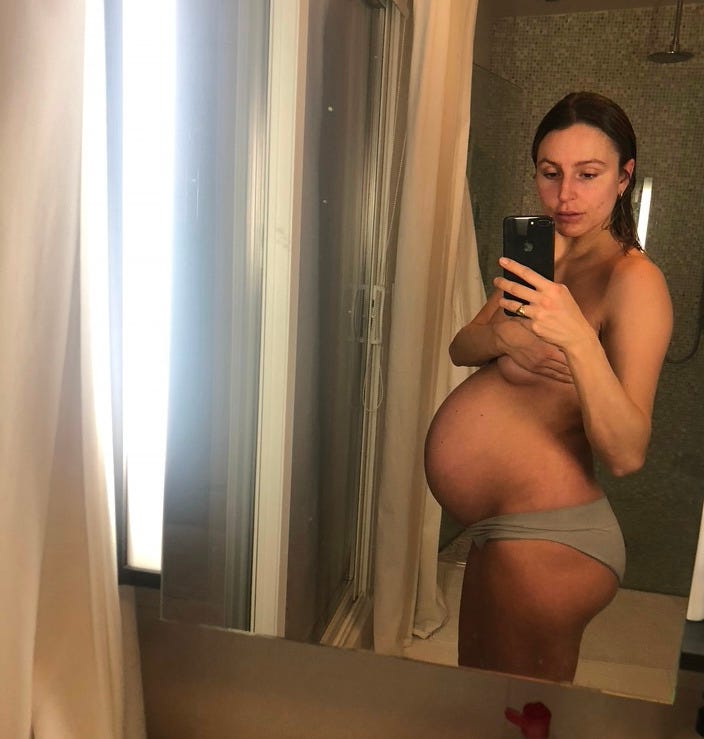
With a six-week pregnancy course and an online “hypnobirthing” seminar both behind me, I felt relatively prepared for what to expect. Each hammered home how long labour typically takes, and how most people end up calling their midwife or going to the hospital way too early. So, when I started having light cramps that evening, milder than when on my period and about half an hour apart, I decided to get some rest and touch base with my midwives in the morning.
I went to bed around 10 p.m., fully intending to sleep through the night. My partner Andrew was in the guest room, taking advantage of a final night of undisturbed rest. The cramps became more regular, but I stayed in bed and opened an app called Freya on my phone. I recorded when they started and stopped, and listened as a soothing British voice told me to imagine my cervix opening like a flower. I inhaled through my nose for four counts, exhaled slowly for eight.
It was hard to measure the exact length of a “surge” (what they call contractions in the hypnobirthing world), as the feeling wouldn’t suddenly cease, but slowly fade and grow.
I had been told to call my midwives when contractions were three minutes apart, lasting a minute each time. My calculations were all over the place: five minutes, three minutes, six minutes, four minutes, two minutes. Two minutes? I abandoned my phone and the now-irritatingly zen voice, and headed down the hall, doubling over midway as a contraction hit.
“Wake up honey, we need to call the midwives!”
The clinic’s on-call receptionist triaged me over the phone around 12:30 a.m. She asked to speak to me during a contraction, and since I was able to respond relatively calmly to her questions, she told us to call back in an hour. Later, I’d learn that dealing with bad period cramps most of my life built up my tolerance to this type of lower abdominal pain, and I was, in fact, extremely far along in my labour.
Sometime before the designated check-in, contractions intensified even more, and I started throwing up after every “surge.” All breathwork strategies and meditation mantras went out the window. Andrew called back and told the receptionist about the vomiting. She still didn’t seem in any rush, but agreed to page our midwife.
The next hour was a long one. I perched on our bed on my elbows and knees, rocking back and forth as the moments of relief between contractions became shorter and shorter. Andrew continued to empty the bucket next to me, and called again to check on the status of our midwife.
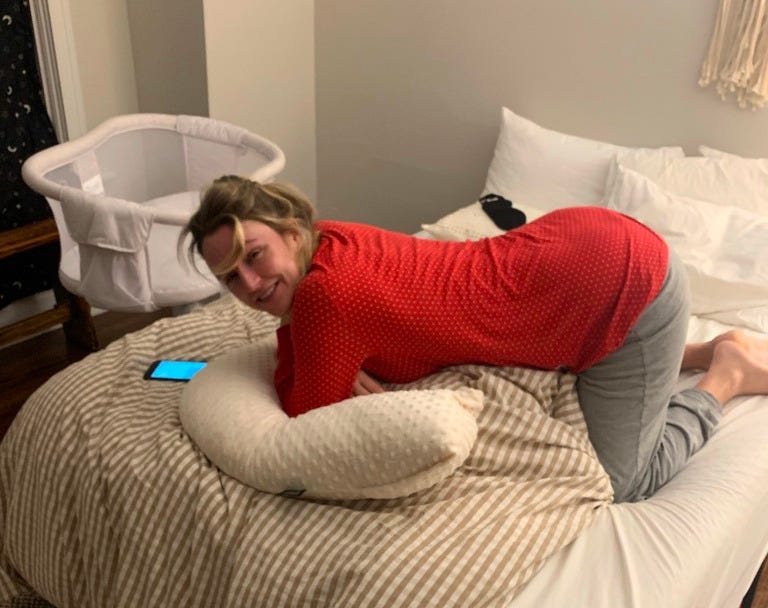
Thick, fluffy snowflakes had been floating down since early evening, and the soft crunch of tires pulling up on our curb around 2:30 a.m. sounded like angels arriving from on high. Andrew answered the door downstairs and I heard them making pleasant small-talk. “Yes, we just moved in a few months ago,” he said. “We plan on renovating the kitchen, and taking down this wall.” Are you serious? I was half-supine on the floor with my back against the end of the bed and feebly yelled something about coming up.
My midwife, Stella, was with a student, whom I had seen at many clinic appointments. They checked my progress as I was lying on the floor. The student went first, but couldn’t seem to find my cervix. Stella reached inside me to see for herself. Her demeanor changed.
“After you finish this contraction, we’re going to have a little chat,” she said. I breathed heavily for a few moments, then dry-heaved over the bucket.
“You’re fully dilated. We could try to rush you to the Birth Centre, but we might not make it.”
“Right.”
“How do you feel about having the baby here?”
“Fine,” I said. I didn’t even need to think—I was thrilled not to have to go anywhere.
Andrew paced next to me. “Here? Are you sure?”
I looked at him and nodded, “Here.”
Stella told Andrew to go grab as many clean towels as he could find, a bottle of olive oil, an old shower curtain, a yoga mat and warm baby blankets. She called the third midwife, whose sole job is to monitor the health of the baby. Stella’s voice was calm yet urgent. “Get here, now.”
Meanwhile, I was in a relieved daze. In my foggy mind, I assumed this pain was standard, and was expecting many more hours of this level intensity ahead. Now, I knew I was that much closer to the end. I waddled to the bathroom to pee. As I sat on the toilet, everything changed. The contractions stopped, and it was like two invisible hands grabbed each side of my belly and began slowly pushing down. It was the strangest sensation, my body acting purely on its own.
“I feel like pushing!” I yelled from the bathroom.
“Hold off!” Stella yelled back. “We need to wait for the other midwife!”
I started running the bathtub, anyway—I needed to be in water. It was like I was some sort of Frankenstein, controlled by my instincts, not my brain.
The other midwife arrived soon, with a suitcase full of gear. I lay down in the tub and started to push—leaning into the waves that were already happening. The head appeared quickly, and would become partially visible during each push, but retreat inside when it was over. Two steps forward, one-and-a-half steps back. This went on for a while.
“Her lips look dry, give her some water,” Stella said to Andrew, and I took a sip through a straw like a boxer in a ring. I was getting tired. Though the pain wasn’t as bad as the vomit-inducing portion of my evening, each push was taking more and more out of me. With every valiant effort, the head would poke out slightly farther, only to disappear again.
The third midwife had some sort of apparatus monitoring the baby’s heart rate. After an hour and a half of this in-and-out routine, Stella became more stern. “We need to get baby out—now. One last big push, let’s go.”
The head was a third of the way out, but wasn’t moving any further. Someone made the decision that I should move to the ground. Our bath is a narrow one, with a shower above. I somehow climbed out of the tub, my baby’s head feeling like a bowling ball between my legs.
Once on the floor beside the bathtub, I was able to spread my thighs wide enough that it finally happened. After a couple promising tries, I hooked my elbows around my knees, took a giant breath in and bore down as hard as I could.
Even though my experience wouldn’t be ideal for most people, I wish more Canadians having low-risk pregnancies were aware of the benefits midwives offer. I also wish that there was broader access to their services and specialized birthing centres. Hospitals are wonderful, but the setting is not always conducive to the vulnerability and intimacy involved in bringing a human into the world. And while doctors and OBs are also amazing, for me it was more important to guarantee that the same person I saw at my appointments would be there at the birth. I am so grateful for the advances in modern medicine that help people get pregnant and regularly save the lives of parents and babies—but ultimately birth is still a biological process that, under the right conditions, our bodies mostly know how to do. When care providers can prioritize comfort, connection and instinct—whatever that looks like to the individual having the baby—parents are more likely to have the experience they want.
That said, if someone asked me to do it all again tomorrow, I’d likely tell them to ship me to the hospital, put me under and wake me when the baby arrives.
I Facetime my mom from bed, the infant who was inside me just hours before curled up beside my breast. “Surprise!” She last spoke to me yesterday, and I hear various tones of high-pitched shrieks as she registers her granddaughter on the phone screen. After the full story, she tells me to get some rest. And I realize I can. There’s nowhere to go and nothing to do but feed and snuggle this tiny creature.
Stella returns the next day, and then every couple days for the following two weeks. She monitors Eva’s weight, gives breastfeeding advice, checks for tongue ties and assuages my worries about her inability to sleep anywhere other than my chest. Amid the postpartum chaos, Stella is a steady, reassuring presence.
I stay cozy inside my home as the mid-February squalls continue to swirl around us, feeling exactly like a hibernating mama bear.
How am I only finding your Substack now? It's full of gems—especially this piece. Such a beautiful re-telling of the magic that is birth :')